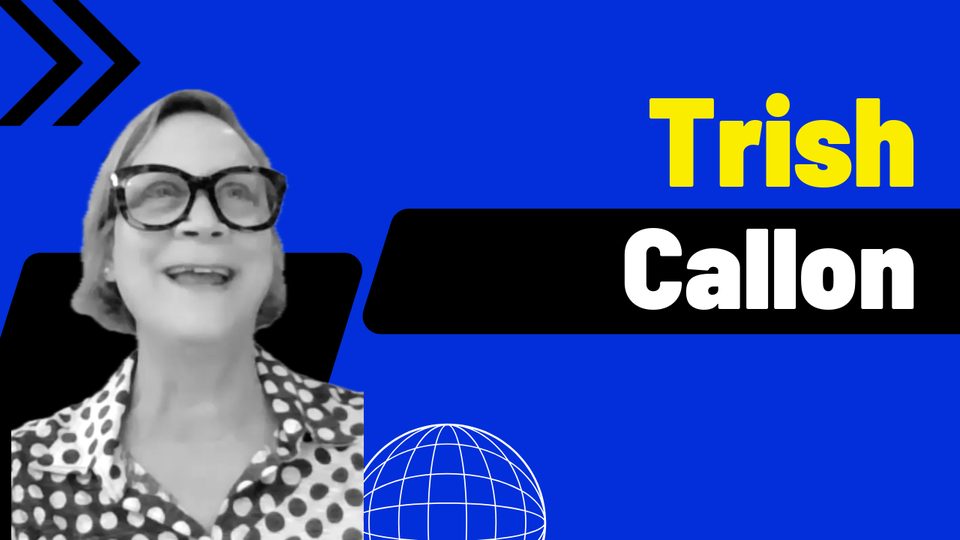
Trish Callon
on Sun Life, growing in-house, her day-to-day as a GC, and the future of insurance
The podcast version. It also plays in any podcast app.
Transcript
8,423 words · about 37 min to readMark the passages that stay with you: press the number beside a paragraph. Marks are anonymous, and the most-marked passages help choose what goes into the book.
To hear a passage, press ▸ under its number; it plays just that paragraph.
See a misspelled name or a wrong word? Select it and press Report an error, or email the correction. The transcript is machine-made; corrections are welcome.
Hello, I'm your host, Pulat Yunusov. This episode is supported by my law practice. Once in a while, I record this show for you. I love it, but my day job is commercial litigation, and I've been doing it for 12 years. I'd like you to know that your referrals are safe with me. You can find my contact information on my website at www.lawco.ca. Thank you very much and enjoy the show. Hello, welcome to another episode of The Yunusov Question, and my guest today is Trish Callon, Senior Vice President and General Counsel at Sun Life Financial Canada. Hello, Trish.
Good morning, Pulat.
It's really good to have you. You probably already know that I always start with the roots. I always start with where you come from because that's what people want to know.
Yeah.
And my traditional question now is, are you originally from Toronto?
I am not. I am not. I, I grew up in— I grew up in northwestern Ontario. I'm from Thunder Bay.
Thunder Bay. You're from the Thunder Bay crowd.
The Thunder Bay crowd.
I know quite a few people from the north, from Northern Ontario. I used to think, I used to think that Muskoka was Northern Ontario, but then, then my friends educated me, and then I realized not even close. Yeah, you have to drive a little bit further, like by 20 hours.
It's true, it's, it's a long drive from Toronto.
Yeah, yes. It's very interesting. So Northern Ontario, what is it like growing up in Thunder Bay and then ending up basically one of the top 5 leaders in the country? So explain your origins. Who are your parents? How did you grow up? What was it like?
Sure, sure. Thanks for asking. So I come from quite a large family. I'm one of 8 children, 7 girls and 1 boy, and I'm the youngest of, of in my family. And so growing up in Thunder Bay was fantastic in the sense that, you know, we had a lot of freedom, spent a lot of time outdoors. You know, there was always lots of activity with a family that large. My mom stayed at home but was very involved in the community, did a lot of, you know, volunteer work. And as, you know, her family grew and she had more kids, time, you know, she really got involved in the community in terms of, you know, sitting on boards.
So demonstrated for me, you know, the importance of community involvement. And my father was a lawyer. So he was an engineer and then he was in the war and then came back from World War II and they were offering free tuition for people who had been in the war to go to law school. And so he took advantage of that opportunity, went to Osgoode, and then— both of my parents were from Northwestern Ontario, different places, Timmins and North Bay. But when my father graduated, he and my mother got in the car with— I'm not sure how many kids there were at that time, but probably 3 or 4— and drove all around Northwestern Ontario to find the best place for my father to open up his practice.
And they landed on Thunder Bay, which at the time At that time, there were two cities, Port Arthur and Fort William. They amalgamated in 1970 and became Thunder Bay. But at that time, they chose Port Arthur. They thought it was a good place for my father to start his practice and to raise a family. And so my father had his own practice. And as is the case with many lawyers who operate in small communities, he did different types of law. He didn't specialize really. He did quite a bit of family law. He did criminal law. Commercial contract type stuff. But in his practice of family law, he mostly represented women who were separating or divorcing from their partners.
And the observation that he made in that work is that women were very financially, often very financially vulnerable. Not only did they not understand finances, either because their husband hadn't shared it with them or they hadn't kind of had the time or inclination to engage in it. But they also, you know, they weren't earning an income on their own. They were totally reliant on their spouse for their financial security. And so one of the, you know, lessons really from my father and one of the things that he and my mother stressed a lot was having financial security. I remember my father saying to me and to all of my siblings, but especially 'cause he had 7 girls, to girls, you know, you can't depend on anyone else for your financial security.
You need to, you know, do that yourself. And he saw an education as the way to do that. You get a good education and then you can get a good job and then you can be, you know, financially secure. So that's one lesson that I had, you know, from a very young age. So I, you know, I always knew that I was going to be pursuing some kind of higher education with a means of, you know, getting a good job. And And they also had another rule, which is that it was expected that we were all going to pursue post-secondary education, but that we were not going to do that in Thunder Bay. They wanted us to go somewhere else, experience, you know, something else.
So sort of the two things that I remember, you know, in terms of, you know, the learnings from my parents were, you know, financial security and you need to kind of go out and forge your own path. And, you know, I was interested in the law from a very young age. Mostly because my father worked a lot and I figured, well, it must be pretty interesting if he's working all the time. You know, he would come home for dinner. I remember it very clearly. He would come home for dinner. We'd have dinner at 6 o'clock. We'd all be sitting around the table. And, you know, we'd have a conversation as calm as that can be with like 7 or 8 kids around the table.
It was always pretty chaotic. We'd have dinner. He'd go upstairs and he'd have a short nap and then he'd go back to the office. Until, you know, 10 or 11 at night. So I figured, well, it must be pretty interesting if he's putting in, you know, those long hours. So I was very interested in a legal career from a very young age. And then the other thing that my father did was, you know, he really encouraged me to, you know, become bilingual. He thought that, you know, having another language, and in Canada, certainly at the time, you know, French was, an obvious choice. And so he encouraged me to do that. And so when I went to university, I went to Western.
My undergraduate degree is in French language and literature. So not the typical path necessarily for law school, but it was, you know, a real passion of mine. And then I stayed at Western for law school. At the time, Western was the only law school that had any kind of program where I could pursue my French. They had an exchange program with Laval, which I took part in. I studied at Laval for a term when I was there. So that's really why I chose Western. So that's in a nutshell, kind of how I ended up pursuing a legal career. And, you know, once I was at Western, I was sort of in, you know, southwestern Ontario.
So it became, you know, kind of a logical step to think about, Toronto as a place to start my career.
Are you still bilingual?
I call myself rustily bilingual. I have some occasion to use my French in my current role at Sun Life. I've had other roles where I've had more opportunity. So once I start speaking it, it kind of comes back quickly, but I'm always a bit— we have a lot of You may know that Sun Life has a large presence in Quebec, very strong business there. We have a lot of bilingual people within Sun Life and on the executive team. So I do have the opportunity to practice it, but I'm a bit of a perfectionist, so I can be a little bit shy, especially when I'm with my bilingual colleagues, but they're very supportive of that.
Sun Life was founded in Montreal. Wasn't it?
Indeed, indeed. Yeah, we've got an iconic office building there. It's, it's, it's, it's worth a visit if you're, if you're ever there.
Wow, that'd be great. So it's really interesting. Sun Life is one of those Canadian champions, I would say. It's a truly Canadian company by origin. It was founded in Montreal. It was founded in according to Wikipedia I'm sure that
must be right.
It's always— it's all— it's often accurate, right? So in 1865.
Yep.
And eventually it landed its HQ in Toronto. You know how just like many people moved to Toronto eventually, you know.
Well, there was a big— yeah, yeah. I mean, there was a— there's a quite a controversy about that when Sun Life moved its head office from Montreal to Toronto. In fact, we still hear You hear about it from time to time, you know, because if you're of a certain age, if you went to school in Quebec, that would be, you know, in your history lesson about this exodus of, you know, Canadian company head offices from Montreal to Toronto. But, you know, I would say that our president of Sun Life Canada is Jacques Goulet, who himself is from Quebec, from Shawinigan, and, you know, under his leadership and the very strong, you know, Quebec leadership team that we have, we've really you know, kind of established ourselves as a, as a force in the Quebec market and, and kind of left that a little bit challenging history behind.
So I'm sure you're familiar with Sun Life's corporate structure. This is a given. You're the general counsel, you're taking care of that. So on your LinkedIn profile you are senior VP and general counsel of Sun Life Financial Canada, right? What it says, right? Right. And then, and then there is also a reference to Sun Life Financial Inc.
Mm-hmm.
Right. So is there any difference? Is it the same organization? Is Sun Life Financial Canada a business name for Sun Life Financial Inc.?
So Sun Life Financial Inc. is the top public company. And then underneath that, as you can imagine, there are a number of different subsidiaries. Sun Life Assurance Company of Canada is the Canadian insurance company. And so I'm general counsel for Sun Life's Canadian business. And then I have counterparts in Asia. There's a general counsel in the US. There is a chief compliance officer globally who's part of the senior legal leadership team. And we report into Melissa Kennedy, who is the Chief Legal Officer for all of Sun Life Global. So she kind of sits at the, at the top of the house, if I can put it that way, at Sun Life Financial Inc. And then she's got a team that supports the, the, the businesses in our different markets.
So the businesses that operate in different markets, are they substantially similar in the nature of their business, or are there significant differences between in, let's say, the US market, the Canadian market, the Asian market?
Yeah, there are differences for sure, which have, you know, kind of developed over time. I mean, at a high level, we are an insurance and asset management company. And so that's, you know, the bulk of our operations. But, you know, in Canada, we have a broad range of products and services that we offer to retail clients. So, you know, individuals who want to purchase, you know, term insurance or universal life insurance or mutual funds. We offer all of those products. We also operate in the group market. So companies who have benefits and retirement products for their employees, we enter into arrangements with those companies to offer benefit plans to the employees. And we're one of the largest players in that market in Canada.
And then in the US, our focus is more, you know, on the group side, in the group markets. In the various countries in Asia in which we operate, I would say, you know, it's a combination of insurance and asset management and mostly, you know, in the individual space, not as much as the group space. So there are differences among the markets, but it's all Insurance and Asset Management.
So explain this combination, insurance and asset management. Why is an insurance company managing assets or why is an asset management company selling insurance?
Well, there are strong connections between the two in the sense that when we sell, for example, an insurance policy to an individual, That's a very long-term commitment that we make to that person. We say that in, I don't know, 20, 30, 40, 50 years when you die, for example, if it's a life insurance policy, we'll be there and we'll pay your beneficiary the face amount of the policy. In order to do that, we have to invest in very long-term assets to support those liabilities. So we are experts in asset management, so it's not a very big leap to go from from that to offering asset management products to our clients as well. And so our purpose, Pulat, is to help people achieve lifetime financial security and live healthier lives.
And the way that we help people do that is by providing them with, you know, what we call protection products. So that's on, you know, the insurance side, whether it be life insurance or health insurance or disability insurance, either directly to individuals individuals or through their employer. And then also, you know, retirement savings plans. So investments like mutual funds and segregated funds. So that's kind of the financial security part of it. And then the living healthier lives comes through our group benefits business where, you know, we offer the health and dental and medical benefits that, you know, so many employers offer to their employees. And, you know, we're very active in in the digital health space.
We have a platform called Lumino Health that's available to all Canadians where you can find information if you're looking for, example, you know, you need to see a chiropractor and you wanna do a search and find a chiropractor in your area. You know, it's got significant search capabilities. So, you know, we're, as part of our living healthier lives purpose, we support, you know, Canadians and all people really in, you know, getting information about their health and looking after their health. And of course, there's a close connection between financial health and physical health and mental health.
Tell me about it.
Well, if you're—
it was more of a joke. Tell me about it.
Okay, you're living.
I see what you mean. It was more like, I totally agree with you. I understand. I'm a sole practitioner. I understand the connection very well.
Yes, exactly.
I understand the effects of financial precariousness.
Yeah.
Yeah. So, and I also came to Canada several decades ago as an immigrant. So,
right.
I definitely understand the effects of financial precariousness and the importance of long-term investment and long-term financial path.
So, right.
Thank you for explaining the connection between asset management and insurance, life insurance specifically in this case. I totally get it. But what you said made me think about something. I, I ponder, if I may put it this way, insurance on a regular basis.
Okay.
Both professionally, because I'm a litigator and I'm involved in insurance claims sometimes, and personally, because I, I have some insurance policies. I drive, so I must have car insurance.
Right.
I have my home insurance, so on and so forth. So when I think about insurance, I think about an event that must occur for, for, for the claim to be approved, for the payment to be made by the insurance company. So insurance companies operate because these events are not guaranteed. They, they can exist. They, they make business because policyholders pay premiums, but insurance events will not necessarily happen.
Right.
It totally makes sense. It's, it's completely fair. That's, you know, the gamble part of this whole infrastructure. Society needs this infrastructure. It's pooling of resources to compensate the victims of these events. Right. But these events are nothing but certain. Motor vehicle accidents, for example, right? Or injuries and things like that. So, but life insurance strikes me as sui generis. It strikes me as something very unique. There is nothing uncertain about death.
I mean,
I'm yet to meet or hear about the person who never— who didn't die.
True.
Yet we call it insurance. So So do you think there is some kind of disconnect here between life insurance and other types of insurance? Or do you think life insurance is just a name for what truly is asset management or wealth management? And this name is used for regulatory purposes, for example. Could you shed some light on this, or am I just off base and I just don't understand
No, no, I don't think you're off base at all. You know, there's so much terminology that has been around for a long time. And, you know, it's something that we as an organization work very hard at. I'm a huge champion of plain language. And in fact, in my role, I've helped support the rollout of a tool that we use across the organization to help us write more clearly and simply. So you can put in, you know, some text and we have, you know, what we call the Sun Life playbook. Like, you know, for example, we don't— we call our clients clients. Like, we don't call them customers. We don't call them other things. We call our clients clients.
That's just, that's just one example. So you can put in, you know, some text that you're proposing, whether it be, you know, for an ad or, you know, a letter or anything like that. And it will give you suggestions on not only like, let's use the Sun Life, you know, plainer and simpler terminology, but, you know, shorter sentences and break up the paragraphs and, you know, all those kinds of things. And I say that, Pulat, because, you know, life insurance is one of those terms. You're right, it's not all that intuitive, right? Like, people don't wake up and say, oh, I'm gonna buy myself a universal life insurance policy today. They wake up and say, I'm worried about my family.
What happens if I get sick or I die? They're thinking about protection, right? And so we, when we're talking to our clients, we do talk more about the protection aspect of our products and services, right? Like you're protecting your family when you get insurance. And you know what? You're right. Life insurance is, is the only product where there's guaranteed to be an event that will trigger the payment of the proceeds of that policy because everyone will die. Disability insurance, health insurance, critical illness insurance, you might not become disabled. You might not get cancer, but it's about your risk tolerance, right? Like how, what is it that keeps you up at night? Does it keep you up at night worrying about like, if I get sick, I'm the sole breadwinner in my family.
And so if something happens to me, we're really in trouble. Or do you feel like you've mitigated that risk and you don't need it? And that's where an advisor comes into play, right? Their job is to get to know you, understand your financial and other goals, understand your risk tolerance, and then recommend products that are suitable for you. Like not everybody needs or wants all of the products that we have to offer.
This is fascinating. And I also admire your plain language efforts. Insurance law is not known—
no—
plain language. No, you said that has these deep roots that go way back when plain language wasn't in vogue. Yeah, I really admire your efforts. And you made me think about Caroline Mandell, one of the guests of my show. She was counsel to the Court of Appeal, to judges of the Court of Appeal, and now one of the leading communication, technical writing, and plain language experts in Canada, I think. So she was a guest on the show also, and we talked about plain language. And it really is heartwarming to know that people at your level who have this influence and respect champion plain language, because as a lawyer, I can tell you, plain language makes a huge difference.
And I'm really thankful to you for leading those efforts. I want to talk about this, about scale. Now, I, I said that your organization is large. You said that your organization is large. You lead the legal function in your organization. You also worked at all levels of scale in-house. I know that you articled at a large Bay Street firm. I think you articled at Blake's, right?
I did.
Yes, I did. But if I'm not mistaken you went in-house immediately after articling, right?
No, I didn't. I didn't. No, I, I stayed. Do you want to tell— do you want me to tell the shortened version of my story?
Yes, let's do it. Absolutely.
Okay, so when I was in law school, I thought I wanted to be a litigator. I thought that was going to be my path. And so— but I also thought, you know what, I should really I wanted to really explore different areas of law. And so the way that I thought I would best do that is by articling at a large firm where I know they had a rotation system and you would, you know, spend a few months in litigation, a few months in corporate, like, you know, kind of work your way around the different areas of the firm. So that was my goal, to get a position, an articling position at a large firm, which I did.
I articled at Blake's and I was hired back. But in my articles, in my litigation rotation. I did not like it at all. I had a very bad experience. I was asked to go and argue a motion in front of a master who was, in my view, very— he was not a very nice person. There was some yelling involved, and I walked away from that thinking, you know what, I don't need to do that ever, ever again. And also, as I observed the various litigation files that I was working on, they were going on for years. Like, they're just like— it, to me, it seemed all this procedure and process and like, when are we going to resolve this?
And then I did a corporate rotation where, you know, it was much more transaction-based, and I thought, okay, this is for me. You know what, we'll sell you the shares, we'll take the money, do the closing book, you're done, check it off on your list, and you move on to the next thing. That's a little more suited to my— the way that I like to operate. So that was good because, you know, I, I discovered that what I really was more interested in was corporate and securities law. And so I worked in the financial services group at Blake's, I worked in the securities group at Blake's, and, you know, while I liked it and I learned a lot and I'm glad I stayed as long as I did maybe sort of 2 years in I was starting to think, I don't know if this is where I want to be forever.
And I don't think I could have said it this way at the time, but now that I've spent as long as I have in-house, I think what I was feeling was far away from the action because, you know, the decisions were being made in another room on the deal. And then I was, you know, because at that point I was very junior. So I was at, you know, the very other end of the spectrum, working on the closing documents, you know, getting it done, but not really hearing, you know, what's the strategy, what are our objectives, you know, all of those things. I was, you know, papering the deal but not really involved in it.
So I felt, I felt far away from that. And I didn't feel, you know, that— and it's not that it was, you know, a bad culture at Blake's at all. I was treated well. I had great great, you know, kind of mentors and teachers. But I also kind of didn't feel like it was, you know, there was a really strong culture of teamwork. Like, yes, develop young lawyers, but still, you know, partners were, you know, I mean, the way that lawyers are paid, it does not necessarily, it's not necessarily conducive to teamwork in the same way that, you know, the way that I'm paid at Sun Life, my fortunes rise and fall with the fortunes of the company.
You know, I say that what keeps the president of Sun Life Canada awake at night keeps me awake at night. I'm completely aligned and completely engaged and completely accountable for, you know, all the business strategy and the advice that I give. I see it through. But way back, you know, when I was a second or third-year lawyer at Blake's, I don't think I could have put it that way. But what happened was, Just as I was starting to think, "Maybe I'll look around," I got a call from the managing partner who asked me if I would do a big favor for the firm and take a secondment at CIBC. CIBC was one of Blake's largest clients at the time, and they had a lawyer on their team who was going off on a parental leave and they needed someone to fill in.
And I said, "Sure, I'd love to." And honestly, from Almost the minute I walked in the door of CIBC and I started to see how they were operating and the engagement that they were having with their business partners, I said, okay, this is it. This is what I'm meant to do. So I never did go back to Blake's. I finished the secondment. Unfortunately, the woman who I replaced came back, so there was no role for me. But I started looking around at financial institutions and I actually ended up at Sun Life. So Sun Life was my first in-house role. I only stayed for about 11 months because about 6 months in, my husband moved to Vancouver.
So, I was working in Toronto. We were living in Toronto, but he moved to Vancouver to start up the West Coast office of the firm that he was with at the time. And we did the long-distance marriage for a while. And then I said, "This is stupid. I'm going to move to Vancouver," which I did. So, I left Sun Life and there was no— Sun Life had no presence in terms of in-house lawyers in Vancouver at the time. At that time, there were two financial institutions who had in-house lawyers in Vancouver, TD Bank and a small life insurance company called Seaboard Life, which is now part of Industrial Alliance. So I called them up and I said, I'm moving to Vancouver, would love to come and see you.
And the general counsel at Seaboard Life, a woman named Joan Rush, she was on her own, she was overloaded. She was a litigator, I was a corporate. Lawyer. They were doing lots of transactions. It was like, she— I was— I mean, talk about right place, right time. She hired me on the spot. And, you know, I was there for 5 years. And it was a totally different experience than Sun Life because they're so much smaller. And it was only 2 of us on the legal team. So, you know, I did a wide variety of things and, you know, loved every minute of it. We had both of our kids were born in Vancouver. And then at a certain point, Most of my family lives in Ontario, and so we didn't have any family in Vancouver.
And for me, career-wise, again, at the time, Vancouver's a very different in-house market now, but at the time it was pretty small. And so, you know, there were a lot more opportunities for me in Toronto, and my husband had an opportunity to come back. So we came back. I'd always kept in touch with the people at CIBC. They had a spot for me in their insurance operations. So I went back to work for them. Sold both their property and casualty and life insurance operations. So I helped wind all of that down and then I stepped into a wealth management role supporting their wealth management business, which I loved. Great business partners, great people on the legal team.
And then after a while, I started to think about, you know, what else I might like to do or where my career was going to go. And sort of two things happened. I wanted to explore, you know, board work, sitting on boards of directors. I was on some of the internal boards at CIBC, but I could see that, you know, this is something that maybe further down the road in my career I might want to do more of. But at the time, as an executive at CIBC, you couldn't sit on a public company board. And so I thought, okay, well, that's interesting. If that's something that I want to pursue, you know, that's going to be a bit of a barrier for me.
But also, I wasn't sure that I saw kind of a clear path for my advancement at CIBC. And so I did something that probably a lot of people thought didn't make much sense, but I left. I voluntarily resigned. I said, you know what, I'm gonna go off and follow a different path. It was pretty risky at the time. My husband is an entrepreneur. I've always been the kind of the employee with the benefits. Had his own businesses. And, you know, our kids were small, but I remember him saying to me, you know, go big or go home. Like, I really, I wasn't happy. I sort of couldn't see my path. And so I left thinking that I was going to, you know, pursue board work, which I did.
I was on the board of Toronto Hydro and I was doing some not-for-profit work, but I also realized that, you know, I was too young. I still wanted to be part of a team and part of an organization. So I had kept in touch with the person who was our regulator when I was at CIBC at the Ontario Securities Commission. She had an investor protection project that she needed some help on. So I did that. I was a consultant to the Ontario Securities Commission and doing my board work, which then got me interested in having a national securities regulator in Canada, 'cause I could see sort of the challenges with, you know, the current system of a separate regulator in each province and territory.
So I was in the right place at the right time when then Federal Finance Minister Jim Flaherty decided that he was going to, you know, really focus on having a national securities regulator. So I joined the organization that the federal government set up to work on that, the Canadian Securities Transition Office. I was the chief legal officer there. Fascinating experience. I learned a lot. We didn't succeed. But, you know, we got closer than anybody else ever has. And as I say, I mean, it was an incredible, incredible learning experience. And then just as I was thinking about, okay, you know, this isn't going to come together, I need to start thinking about my next role, I got a call from Melissa Kennedy, who's my boss at Sun Life.
And we had been colleagues at CIBC. She ran the litigation team and I was supporting the wealth management business, and she had I had just joined Sun Life as general counsel a few months before, and she reached out to me and said, you know, I've got a role, there's someone who's retiring, I'm trying to change the way that the legal function operates, and, you know, I'd like you to come and help me with it. And I was like, oh, that sounds really cool. And so I remember going home that night and saying to my husband, like, I think I might have this really interesting opportunity at Sun Life. Sun Life. And he said, well, that's great and it's about time.
And I said, what do you mean it's about time? And he said, well, you know, men start new roles in organizations and they reach out to their, you know, former colleagues and their trusted, you know, confidants and colleagues all the time and bring them in. And it's about time that women started doing the same thing. So anyway, to make not a very long story even shorter, that's how I came to be in my current role at Sun Life. Life, which I love and which I really believe that all of the things that I did in my career led me to this role and led me to be qualified for the role. Like, if I hadn't, I could have stayed at CIBC and I, I probably would have had a good career, but I took a big risk.
I went on and I did some other things, so I've got that regulatory experience. And, you know, it's, as I say, it's kind of led me to this you know, incredible role that I have at Sun Life.
This is a great story. You know, I wanted to ask you about the role of women more senior than you in your career, and I think you answered that question. You, you, you would make— you make a great interview guest. You preempt my questions. This is, this is the best. Well, you worked at all scales. You just told your story, and I can see that you worked at all scales. You work at a firm for a few years in the beginning, but then the rest of your career and your career now is in-house, the legal department.
Yeah.
Please tell me how your day-to-day work evolved from the lowest rungs to where you are now. Yeah. Do you even draft anything today? Do you even do any law? Is it mostly a business role? Do you just push outside counsel around? Right. So how did your role evolve from the beginning to its condition now, its state now?
Yeah. I mean, it's a really interesting question, Pulat. You know, when I first started in-house, In the roles that I would have, I would say it was more similar to the work that I was doing in private practice with the exception that there was a much closer connection with the business, right? Like you're sitting around the table when they're having discussions about, you know, let's issue this new product or we're dealing with this regulatory issue because the way that we, the legal team at Sun Life operates. So, I'm a member of the Canadian executive team. So I sit at that table with Jacques Goulet and the rest of the Canadian executive team. And then I've got vice presidents who report to me and they have people who report to them and so on.
All the way down at various leadership and project tables, we are literally at the table as issues and strategies are being discussed. And so, you're doing the legal work like drafting the contract or commenting on the marketing materials or to the extent that there's litigation. We have a very large litigation team in Canada and we in Ontario, we defend many of the actions ourselves. So it's a bit of an unusual model. A lot of insurance companies, they exclusively use external counsel to defend their claims, but we have a team of about a dozen litigators who do that directly themselves. And then across the country we use firms, but in any event, You know, when I first started in-house, I would say, you know, there was more traditional legal work that I was doing.
And then I think what changed was, you know, a big change for me was when I became a vice president at CIBC and then I had a leadership role. I was managing people and, you know, accountable for, you know, their development and, you know, thinking about about succession planning within the legal team. I was also at that time, you know, I sat at the wealth management senior executive table. So that's sort of what changes as you move up in an organization is that you have more leadership accountabilities. And, you know, I would describe, you know, the legal work that I do as strategic advice. So I'm probably not I'm not drafting the prospectus or the contract.
If there are strategic issues that come up on it, I'll be weighing in on that. Often the way that I describe the difference between private practice and in-house is sometimes the question that we ask our external counsel, on whom we rely very heavily and we have great relationships with, like just because we have a large in-house team, we use external counsel extensively. Like they bring tons of value to the table, which I can talk about more if you're interested in that. But the way that I describe the difference between in-house and private practice is in private practice, we're often asking the question, what can we do? What does the law say we can do?
The question that I get asked and the question that my team gets asked is what should we do? What should we do? Here's what the law says. Here's what's fair to our clients. Here's what the regulators are going to think. Here's how it's going to land on a client. You're taking into a much broader range of perspectives when you answer the question, what should we do? And to me, that's way more interesting. There's much more complexity in it. You're informed by, you know, the organization's risk appetite, our strategy, what are we trying to achieve? But that's, that's the difference. And so, you know, I spend my time on those kinds of things and a lot of time on leadership and succession planning.
After you and I are done, I'm spending an hour with my leadership team talking about our top talent. What are our development plans for them? How are we going to retain them? How are we going to keep them engaged? You know, do they see a path? Like, it's one of the reasons why I joined Sun Life life. We have an incredible focus on talent. We take it really, really seriously. You know, I mean, we don't manufacture anything, you know, physical, not chairs, not tables, not, you know, nothing. We have products and services. Our biggest resource is our people. And so I spend a lot of time on those kinds of issues.
You know, when you talked about how you landed the role at Sun Life, your current one, you mentioned that the mandate was to reimagine
the
legal department. So I wanted to talk about innovation.
Sure.
In your legal department, or in legal departments in large organizations in general, because of course you you have the scope, you have the view from where you are to be able to talk about that.
Yeah.
And there are several issues here in the, you know, 10 or 15 minutes remaining. I was hoping we could just hop over those issues.
Sure.
And you're the kind of guest I could talk to for 5 hours, but, you know, you're very kind. I have to return you to your senior management team in 15 minutes, so I understand that. But so my first question is about resolving insurance claims, and of course I mostly acted on the plaintiff's side in insurance claims, and for that reason I know plaintiff's lawyers and I know defense lawyers.
Yeah,
I work much closer with insurance defense lawyers with plaintiff's lawyers because that's who you work with on the file. The opposing counsel counsel.
Yeah,
and I have a skewed perspective. In general, litigators always think about what can go wrong. They don't think about what will go right.
Yes.
So in my view, so my question is, why is it so expensive to resolve insurance claims? Why do we need lawyers? The courtroom is, is filled with highly educated people who are charging very high rates. I'm not even talking about judges who are some of the best people in the country when it comes to intellect and knowledge.
Yeah.
And then it takes also years to arrive in that courtroom for the trial.
Yeah.
Is— but or is the share of these disputes very small? Is the— does the insurance industry work well overall? Is my perspective completely skewed or is there an issue that people at your table actually think about and talk about?
Yeah, I mean, it's a really interesting question. I mean, I can't— I don't know what I can say about the fact that the wheels of justice turn slowly. I think it's frustrating. I think it's unfair. We experience it to a certain extent in the same way that plaintiffs' lawyers do. We would like to resolve things quickly as well. It's to everyone's benefit. And if I could speak for a moment about a lot of the litigation that we do are disability lawsuits. So someone is experiencing some kind of serious health event. And so as much as we can, we try to move quickly and we try to prevent We have what we think is a very fair and transparent appeals process so that people, if people disagree with our decision, they can come to us and appeal that.
And sometimes those matters are resolved at that stage. If it's not resolved to their satisfaction and they feel that they need to go to court, bring a lawsuit, then of course we'll defend it. But we also pay a lot of claims to the satisfaction of our clients. And so I understand that your perspective would be that there are a lot of disability lawsuits and I don't have the numbers sort of at my fingertips, Pulat, but I can tell you that A lot of claims are paid and resolved to the satisfaction of everyone. We do have this appeals process that clients are able to take advantage of. And then, you know, for those clients that feel that, you know, the result is still not, you know, fair to them or reasonable, then yes, you know, there is litigation that ensues.
We do a lot of mediations. You may know that, you know, we resolve a lot of lawsuits in mediation. And even, you know, we try and resolve them before mediation. So we have all kinds of strategies to resolve those lawsuits as quickly as we can. You know, there's obviously some kind of a disagreement if someone has started a lawsuit. So I don't underestimate that or diminish the importance of it, but I can tell you that we work really hard to resolve those as quickly as we can within the framework that, you know, we all have to work in.
One of the biggest tasks of insurance companies is to track risk. At least that's what I understand insurance companies do. They gotta monitor risk because, yeah, their bottom line depends on it directly.
Yeah.
Do you have any perspective on how How has risk changed over the last several decades because of technological innovation, healthcare innovation? Is there more risk now or is there less risk? For example, there is talk of self-driving cars eliminating motor vehicle accidents, right?
Right.
That's relevant, of course, to automobile insurance companies and personal injury lawyers because the work might be disappearing for them, right?
Right, right.
Do you have any perspective on how risk evolved over the last several decades, let's attribute it to technology and technological progress.
Yeah, I mean, I think there's been a tremendous increase in the risk that all organizations face. And, you know, you're quite right to point out that, you know, we have an intense focus on risk management because we're an insurance company, we're highly regulated, you know, both at the federal level, the Office of the Superintendent of Financial Institutions is what we call our prudential regulator. So, you know, kind of our financial stability and prudential type risks. And then we've got various provincial regulators on securities and insurance side that are more focused on, you know, kind of market conduct and client type risks. You know, the types of risk that we now have to manage for are, are much more complex than they used to be.
You can imagine that we are incredibly focused on things like cybersecurity. You know, we are very focused on sustainability and climate change. You know, even the regulators themselves themselves are now focusing on those things and, you know, asking us, you know, how we're managing them from a client perspective. What we see in terms of regulation in the insurance and asset management space is this focus on treating clients fairly. And, you know, what does that mean? I mean, that is, you know, that's a tremendous obligation that we have to treat our clients fairly. Every step of the way from the minute that we start to think about a new product, how it's designed, how it's marketed, how it's sold, how we administer it, how we handle complaints, you know, if there's litigation, how we handle that.
So I mean, the complexity of the risk of the type and magnitude of the risks that we have to manage is incredible. And I would You know, we're very well set up to do that. Our shareholders, our regulators, our clients, they expect us to be. Privacy risk is another thing that we're incredibly focused on. We have very, very sensitive, highly confidential information about our clients. We have a huge obligation to protect that and make sure that, you know, it's treated properly. We're not using it for purposes other than, you know, what we said it would. So yeah, Yeah, they're, you know, risk management. That, that's— I would say like generally it's part of everyone's job at Sun Life in some way, shape, or form.
We're kind of constantly managing that risk.
We live in uncertain times, and I don't even need to explain why. I think everybody understands that. Your answer right now also highlighted some new risks that didn't exist You talked about risk, insurable risks, risks, right? You talked about risks to your insurance policyholders that will trigger certain events where the insurance company will make payments. But in the life insurance business, or the other side, the flip side of life insurance business, as you said, is wealth management. That's the foundation of life insurance business. Without significant assets underlying your life insurance business, there is no life insurance business. What about the market risk today? What if the market tanks? What if there is a significant global financial event that wipes out equity?
Yeah, yeah.
What is— what steps What steps is your company taking in that direction? What is the thinking? What is the discussion at your table about?
Yeah, I think, you know, and I want to be clear, I'm not an investment expert. We certainly talk about, you know, that kind of risk at the Canadian executive table, you know, at the executive table, at our board table. So obviously it's a huge area of focus. What I would say at a high level, Pulat, is that, you know, we are a well-diversified company. We operate in different markets with different products, you know, different types of clients. That in and of itself provides us with protection so that if something is going wrong, you know, or the markets are not doing well in one jurisdiction, maybe it's not exactly the same in another jurisdiction. To have, you know, that kind of diversification.
And of course, the assets in which we invest to support all of our liabilities are very, very diversified as well. So we have, you know, highly expertized investment experts on our team across the organization who pay a lot of attention to the diversity of our assets, you know, the duration of them, jurisdiction, like all of those I mean, as you said earlier, we are managing risks of all kinds, and that market risk, especially right now, it's one of the ones that we're very focused on.
Tricia, I want to thank you for this wonderful interview. I want to wish you all the best in your career. You certainly taught quite a few lessons today in this interview. You taught me a few lessons. Few lessons, I'm sure. I can't wait to share this interview with our with our audience. Thank you so much, Trish.
Thank you, Pulat. It's been a real pleasure.