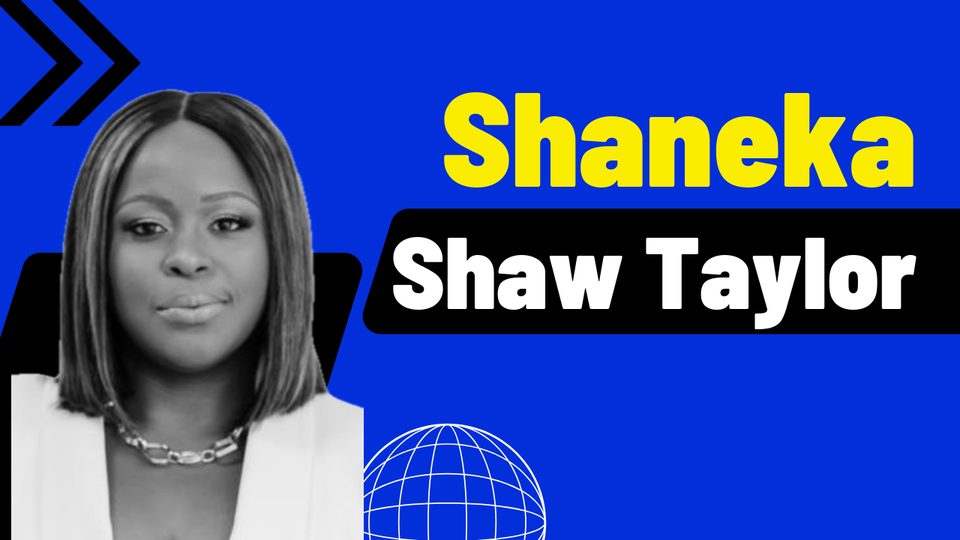
Shaneka Shaw Taylor
on Jamaica, municipal liability, and real estate agents' standard of care
The podcast version. It also plays in any podcast app.
Transcript
3,580 words · about 16 min to readMark the passages that stay with you: press the number beside a paragraph. Marks are anonymous, and the most-marked passages help choose what goes into the book.
To hear a passage, press ▸ under its number; it plays just that paragraph.
See a misspelled name or a wrong word? Select it and press Report an error, or email the correction. The transcript is machine-made; corrections are welcome.
Hello everyone, this is another episode of The Yunusov Question and we always have great guests. Today we have a very special guest. I must say I shared a locker in law school with this guest. I don't know if she remembers it, but we definitely, I definitely remember. Her name is Shaneka Taylor. And I'm sure many of you know her. Without further ado, it's really good to see you, Shaneka.
Thank you, Pulat. I didn't remember that we shared a locker. Your memory is excellent. But I do have fond memories of our time at Osgoode. So
yes, we did share a locker. And what else do you remember from law school?
I remember being involved in a lot of things, too many things, being involved in student council, Legal and Lit, different clubs and societies, sitting on the Dean Search Committee, just having a really great, a good cohort of students in Section C. But it was, yeah, it was a good time. It doesn't feel like 10 years ago. Oh my gosh, time does fly.
You know, when we were chatting before this interview, I learned something that I didn't know. You are actually like me, an immigrant here in Canada. You, like me, were not born in Canada. Tell us a little bit. I mean, I know what your cultural roots are, but tell, tell the audience where you come from and tell the story.
Absolutely. So I was born in and raised in Jamaica, moved here when I was 16. We finished high school at that age and moved here with my family, went to undergrad at University of Windsor I did that in 3, 3 and a half years, then went to Osgoode, and the rest is history. And if you're a musical, a fan of musical theater like I am, as you know, they say in Hamilton, immigrants, we get the job done.
Exactly. You know, there's— we have one more thing in common. And looking at your undergraduate degree, I see that you went to the University of Windsor and you were in the International Relations program.
Yeah,
I also have an International Relations undergrad.
I would be working at the UN or in some diplomatic sphere in my life. I actually went to Osgoode because I thought and wanted to be an international human rights lawyer, so every international course there was, I took it because I said that was my trajectory, that was what I wanted to do. And from time to time, I still think about it. You know what, what could have been if I had pursued that path. But I'm still enjoying what I'm doing. So that's a good thing.
What is the source of your interest in international affairs in the United Nations? Not a lot of people in North America have this interest compared, for example, to people from other parts of the world. Right? And let's consider Jamaica part of North America, right, for our purposes.
Well, growing up, it wasn't a it was a happy childhood, but it wasn't necessarily an affluent childhood. And all around, I could see instances of poverty. And, you know, the very reason why my family moved to to Canada was so that we could have a better life. And so that always stayed with me. And when I went to undergrad to pursue international relations, actually, so my degree is in international relations and development studies. And so at Windsor, you— it's two streams. You can either focus on the international relations piece, which is more, you know, intergovernmental relations and so forth, or you can focus on the development study stream, which is what I did.
And so that's more looking at, you know, globalization and the effects of globalization and interconnectedness around the world, but on a focus on Third World and developing countries, which is what, you know, where I come from. So it was, it was always within me to how can I give back to my country, my community, when I entered the profession. And as I said, at that time I always thought my profession was going to be in some aspect of international relations but with a focus on development issues. So yeah, while, you know, Jamaica is famous around the world for many reasons, it's still a country that has a lot of socioeconomic issues that we're still grappling with.
And I'm still trying to figure out for myself you know, how I can add to that conversation and to help my country and my community. But it's a work in progress for me, at least.
Do you maintain close ties to Jamaica? Do you still have family back there? Do you go back and forth? Do you work on any projects related to Jamaica?
Yeah, absolutely. I still have family there. My grandparents are there. I have siblings there, nieces and nephews. I try to go back at least once a year. Sometimes twice. So yeah, and I work with an organization that's called Food for the Poor Canada. It's— we have a Canadian branch, but it was founded in Jamaica. It's pretty large in Jamaica. And so they provide international humanitarian relief to Jamaica and other Caribbean countries, Haiti, Dominican Republic. So I still try to keep my hand in the development world through that organization. But yeah, I wish I could go back. I wish I could be there now working from home in Jamaica.
Right.
So do
I. Although I'm not from Jamaica, I'm sure I would be welcome there.
It's great. It's beautiful weather right now. And yeah, it's just a different lifestyle.
You came to Canada though. When you came to Canada, you were not a young child. You were about 16, right?
I was 16. As I said, I just finished high school because we start school younger in Jamaica. We start about 2 or 3 and we finish high school at 16. And then you can do, you know, 2 more years of post-secondary— sorry, 2 more years of secondary, which is similar to the what was it called here? Oh, whatever you do after grade 12 here. I
didn't go to high school here, so I wouldn't know.
Okay, whatever it is that they used to do after grade 12, you could do that there. Then you go to to secondary, post-secondary school. But I finished high school at 16, and then I moved here. And it was a rough transition. It was a rough transition because I was coming to a new country. Other than my family, I didn't know anyone. I had a great group of friends in high school that I was still very close to. I didn't find out I was moving here until a few weeks before, so it was just all around traumatic for me, and I thought like that was the end of the world. Obviously, in hindsight, I'm glad I went through that experience.
My family, you know, as with any immigrant family, we come here because we want a better life, and there are a lot of opportunities in Canada, and I'm grateful that we are here and that we did come because it gave me the opportunity to go to post-secondary to pursue a career in law. That was always something I wanted to do from my earliest memory, from perhaps— my family tells me since I was 3, I've always said I wanted to be a lawyer. So, you know, I'm glad that we moved here even though it was a rough transition. And I always tell friends and family back home or thinking of making that move to Canada, that perhaps the time that I came, which is right after high school, is perhaps the best time to move to a new country, right?
Because you're, you're, you haven't fully, you know, gotten into adulthood. You haven't cemented yourself professionally. It's a, it's an easy time to make that transition, whereas, you know, if you're an immigrant who's you know, started your career and have to come here and start all over again. It's just, I've heard stories that it's so much harder. So I'm glad I, I came when I did, even though reluctantly.
Well, yes, the stereotype is this PhD driving cabs or a doctor driving cabs or now probably delivering takeout or something like that.
Exactly.
You came here, did you go to university almost immediately, or did several years, did a couple years pass before you went to university?
Yeah, so I was here perhaps a year, a year and a bit before I started school. Yeah, just volunteering as far as I can remember. Yeah, just, just getting myself situated and assimilated.
Yeah, when you were in Jamaica, how, how late in the game did you learn that you were moving to Canada? Was it the last minute notice by parents, or it was kind of in the works for a few years?
So it was in the works, unbeknownst to me.
Those parents.
Exactly. So I finished high school and then I moved here in the summertime, so 2, 3 months. If that much.
Wow. What was your plan, your personal plan about education? So you didn't know you were going to move to Canada. Were you planning on going to university in Jamaica?
So I hadn't thought that far out, but I always knew that I wanted to be a lawyer. I'm very much a goal-oriented and a goal-driven person. So if I set my mind to do something, I'm going to accomplish it. I don't care how long it takes or what it takes. So I was always focused on, okay, I'm going to be a lawyer. I'm going to do the things that are required to be a lawyer. I can't say for certain that I knew exactly what it took at that age, but I knew, okay, let me just focus on where I am right now and then look to what the next step is. So I always knew I was going to be a lawyer.
And if I think about it now, the natural progression would have been for me to apply to university there and then go to law school. So I just did the same thing here.
Why did you choose Osgoode after your undergrad as your law school?
So interesting story. So my family moved here, as I said, when I was 16. My mom was already living here. And then after I finished undergrad, she decided she was done with the cold, couldn't do it anymore, and she moved to Florida. And so, and so at that time she gave me the option, okay, you can either come with us or you can stay. And so I had applied to a number of schools in Ontario, and I also applied to a few schools in the States, you know, hedging my bet. And then when I got into Osgoode, I was like, yeah, that's it. I'm staying because Osgoode to me was always such a preeminent institution, and I, you know, was happy to have the opportunity and the privilege to go.
So even though I got a scholarship to go to some schools in the States, I'm like, yeah, Osgoode's it for me. So that cemented the idea for me, or the decision for me.
Okay, you summered an article with a very reputable firm in Toronto Milano, and you joined another very reputable firm as an associate in 2012, if I'm not mistaken.
Yeah, yeah.
But you also got your real estate sales representative license.
I did.
Did you get it at the same time as your license to practice law or a little bit later?
No. So I've been practicing for about 2 years at that point. And as I said, I am a person that once I make my mind up to do something, I just do it. So it's interesting because around that time I'd started developing interest in real estate, and my husband and I were living in York Region at the time, and we decided to sell our house, and we used a realtor, and she was, she was nice, she was competent, but I remember going through that process and thinking, man, like they're making a lot of money off us. And like, I feel like I could do better. And just making that declaration, I'm like, all right, I'm going to sign up.
I'm going to do this. And then the rest is history.
This is an interesting story, but your real estate license is actually directly related to your a principal area of practice, if I'm not mistaken. Tell us about your practice and how those two are connected.
Yeah, it's interesting because so my firm, Boghosian and Allen, we primarily practice municipal liability litigation. That's the majority of our practice. But over time, as I said, I've developed an interest in real estate. And because my firm is one where, you know, we appreciate and we applaud and we encourage our associates to develop their own practices, that I was fortunate enough to develop my real estate litigation practice, which is what I do a lot of right now. So I work with a lot of agents, homeowners, landlords, tenants with a variety of real property litigation disputes. So it's, it's interesting how that first interest in real estate really developed, and now I'm able to merge my real estate license practice, conveyancing practice, with litigation practice.
So it's good. I've been able to tailor the practice that I want, and I'm continuing to do it. But it's, it's interesting how it all transpired.
When your litigation practice concerns real estate agents, do you defend them or do you act against them? Do you act against insurers?
So it's typically acting against real estate agents. And as an agent myself, we're, we're insured just in the same way that we are as lawyers. And the insurance company for agents typically has a panel of lawyers that they, they tend to use. So majority of my practice as a litigator, I would say, is prosecuting claims against agents.
So I think I know a good reason to believe that you're really familiar with the standard of care for real estate agents, not because you yourself have a real estate agent license, but also because you wrote a book.
I did.
You wrote a book. Tell us about the book.
Yeah, I wrote the annotated Real Estate— Real Estate Business Brokers Act regulation and the act under regulation. So I annotated that statute. And again, going back to what I said, so I was doing some research for one of my cases against an agent, actually, and I was trying to find a resource to help me do my research. So One of the things that I looked for was an annotated version of the legislation, and I couldn't find one. So I called up a friend of mine who I knew had published an annotated statute, and I said to her, you know, how did you do this? And she quickly walked me through. I'm like, okay, I'm gonna do it, and the rest is history.
That's amazing. A person of action.
I guess you could say so.
Yeah, you know, you just, you just make things happen when you want them to happen. Everybody can learn from that. So I'm really interested in real estate agent standard of care, professional standard. So can you tell me, in your view, what does a perfect real estate agent look like? Describe that, describe a perfect real estate agent to me. I mean, you don't have to give an exhaustive definition of the standard of care right now. This is— there is no legal advice on the show, but from the point of view of your— from the height of your experience and also as a real estate agent yourself, because a lot of people I'm sure have no clue how to find a real estate agent, what to expect from a real estate agent, even what they actually do.
Even you, remember, you said, you know, they, their commissions are high, but I could do it better. So who is, who is a great real estate agent? What is it?
So I can't speak to a perfect one, but I'd say an ideal one for me is someone who obviously takes their responsibility very seriously. It is one of a fiduciary obligation to your client. In the same way that lawyers are. And so recognizing that in a real estate transaction, particularly a residential one, this is perhaps the biggest investment that an average person will make in their lifetime, particularly if they're a first-time homebuyer. So taking the gravity of that with the seriousness that it deserves and acting in the client's best interest at all times But it's also being a skilled negotiator a reference point for your clients to refer them to different professionals. Because in a real estate transaction, it's not just the agent that you— the client comes in contact with.
It's a real estate lawyer, an appraiser if necessary, a home inspector. So there are different professions that are subsumed in that transaction. So being being able to have a team, a competent team of professionals that you can refer your clients to, that, you know, the clients can trust to do a good job for them. So, you know, it's having that being that referral database, being a skilled negotiator, but also recognizing your limits as a professional. A lot of a real estate transaction is very contract-based, right? And majority of real estate agents are not lawyers, and majority of them rely on either themselves or what training they receive from their brokerage to interpret clauses that are in these contracts that are supposed to be protecting their clients.
And I've come across a lot of agents who just put in clauses and don't really understand the legal ramifications of doing to do that. So it's, it's someone who recognizes their limits in terms of not having all the answers and knowing everything, but being able to refer the client or themselves if necessary to competent individuals such as a lawyer to explain certain things. So to me, that's, that, that's the picture of an ideal agent.
That's a great answer. And you know, you just reminded me about this practice when real estate agents draft schedules to the standard OREA agreements, and this is an endless source of litigation in my, in my experience. Do you think the time has come to take legislative action and standardize some of the language that commonly parties purport or seek to have in those schedules. I've seen a range of things, but really, it's really just a small set of, of ideas that they want to put in those schedules.
Yeah, so a lot of the clauses that you will typically find in a run-of-the-mill residential transaction are actually pre-drafted and available to agents through whatever board they're affiliated with. And then Oftentimes it's up to the agent to tailor that language to suit their particular transaction. But sometimes, you know, they don't understand even the pre-printed clauses themselves. And so if you don't understand the clause, you can't explain it to your client and protect their interests. So I think it's more around education, more so. And a lot of these clauses are drafted in a very legalese manner. So perhaps, you know, the time has come to revise those clauses to make it more reader-friendly for the average person, for sure.
Do you act as an expert in real estate disputes, as an expert witness?
No, no, not there yet. One day.
But why not, right? I totally see you as an expert witness. You wrote a book, an authoritative book, and you've practiced law for many years. You know what, this 10-year threshold is when we stop being junior lawyers.
That's right. In my head, I'd always be one, right?
This is, this is an amazing profession. Yeah, yeah, exactly. This is an amazing profession. Well, look this has been a really interesting conversation, and I want to be conscious of your valuable time. It's been truly a joy. I want to thank you. I want to thank you. And just by, by listening to you in these few minutes, I learned quite a few things that will be useful to me in my own practice. And I, I'm sure our listeners and our viewers also learned a bunch. I wish we had more lawyers like you who were willing to talk about substantive things to wider audience, who were generous with their time and with their knowledge like you are, Shaneka.
Thank you so much.
You're welcome, Pulat. And it was a pleasure for me. I don't get these opportunities very often, but— and I also don't really like talking about myself, to be quite frank. But it was a pleasure.
You need someone like me to to talk about you. So I can, I can talk about you or help you talk about yourself. You definitely need to be heard more. I absolutely believe in that.
Thank you.
Thank you, Shaneka.